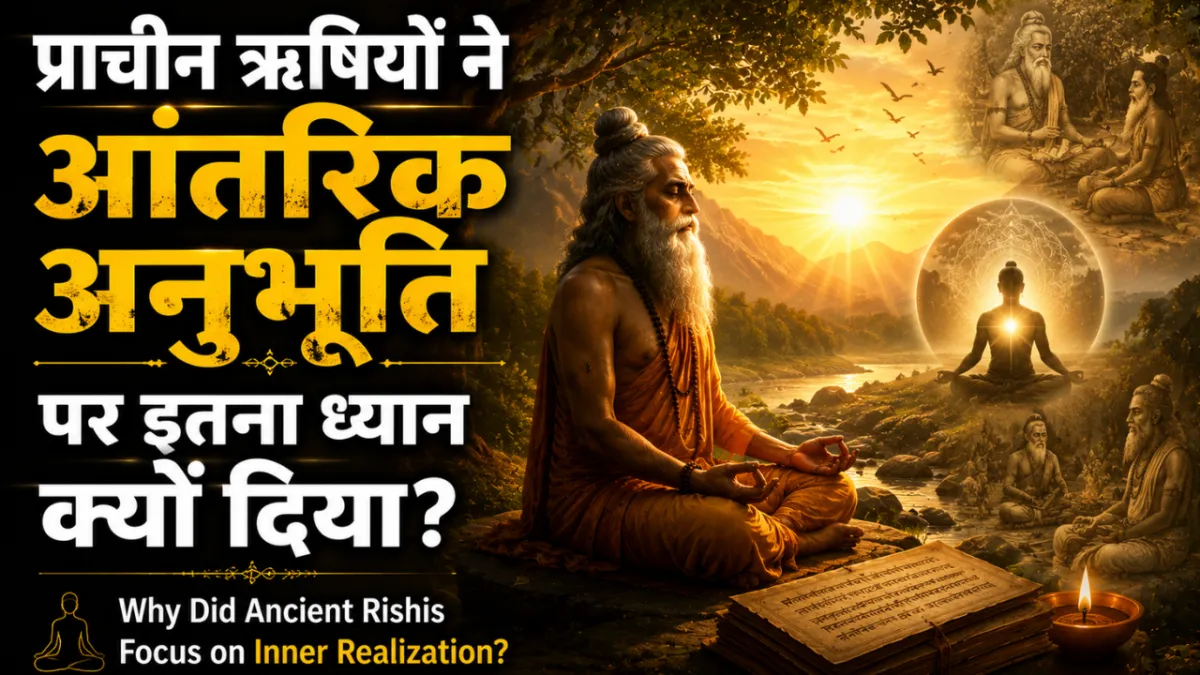
प्राचीन ऋषि केवल दार्शनिक या कवि नहीं थे। वे अनुभव करने वाले साधक थे। वे सत्य को केवल पढ़ना नहीं चाहते थे, वे उसे जीना चाहते थे। इसी कारण वे बाहरी जानकारी से अधिक आंतरिक अनुभूति पर जोर देते थे।
English Translation:
Ancient Rishis were not merely philosophers or poets. They were seekers of direct experience. They did not want only to read truth; they wanted to live it. That is why they gave more importance to inner realization than outer information.
वेदों को श्रुति कहा गया - यानी वह ज्ञान जो सुना गया। पर यह सुनना केवल कान से सुनना नहीं था। यह वह गहरी अवस्था थी जिसमें ऋषि चेतना के सूक्ष्म स्तर पर सत्य को ग्रहण करते थे। वेदों की परंपरा लंबे समय तक मौखिक रूप से संरक्षित रही।
English Translation:
The Vedas are called Shruti - that which was heard. But this hearing was not merely through the ears. It refers to a deeper state in which Rishis received truth at subtle levels of consciousness. The Vedic tradition was preserved orally for a very long time.
ऋषियों ने देखा कि शरीर बदलता है, विचार बदलते हैं, इच्छाएं बदलती हैं, समाज बदलता है। लेकिन एक साक्षी चेतना है जो इन सब परिवर्तनों को देखती है। इसलिए उन्होंने पूछा - “जो बदल रहा है, उसके पीछे जो नहीं बदल रहा, वह क्या है?”
English Translation:
The Rishis observed that the body changes, thoughts change, desires change, and society changes. But there is a witnessing consciousness that observes all these changes. So they asked, “Behind everything that changes, what is that which does not change?”
मांडूक्य उपनिषद आत्मा को जाग्रत, स्वप्न, सुषुप्ति और तुरीय अवस्थाओं से समझाता है। इसका उद्देश्य बाहर की चीजों की गिनती करना नहीं, बल्कि अनुभव करने वाले की प्रकृति को समझना है।
English Translation:
The Mandukya Upanishad explains the Self through waking, dream, deep sleep, and Turiya. Its purpose is not to count external objects, but to understand the nature of the experiencer.
मान लीजिए किसी ने मधु के बारे में सौ पुस्तकें पढ़ लीं। क्या इससे मधु का स्वाद आ जाएगा? नहीं। स्वाद तभी आएगा जब वह उसे चखेगा। इसी तरह आत्मा, ब्रह्म, शांति और मोक्ष केवल शब्द नहीं हैं। इन्हें समझने के लिए अभ्यास, ध्यान, संयम और अनुभव चाहिए।
English Translation:
Suppose someone reads a hundred books about honey. Will that give them the taste of honey? No. The taste comes only when they experience it. Similarly, Atman, Brahman, peace, and liberation are not just words. To understand them, one needs practice, meditation, discipline, and experience.
आज हमारे पास जानकारी बहुत है, लेकिन शांति कम है। हमारे पास स्क्रीन बहुत हैं, लेकिन स्थिरता कम है। ऋषियों की शिक्षा आज भी कहती है - पहले अपने भीतर लौटो। जब भीतर स्पष्टता आएगी, तो बाहर का जीवन भी अधिक संतुलित होगा।
English Translation:
Today we have a lot of information, but less peace. We have many screens, but less stillness. The teaching of the Rishis still says - first return within. When inner clarity comes, outer life also becomes more balanced.
उत्तरदाता :-

Sachin Verma
Shivpuri, MP
प्रश्नकर्ता :-
Gupt Sadhak
HI App

👁 14742
👁 3763
👁 7078
👁 6041
👁 5598
👁 5248
👁 3308
👁 8144

HinduIntellectual: Explore 700+ shastras, Ramcharitmanas, bhajans, aartis, mantras, festivals, contests, and spiritual insights. A platform for Hindus to connect, learn, and celebrate Sanatan Dharma.
support@hinduintellectual.com